I Didn't Have to Tell Them What to Do, and That Was Exactly the Point.
One student stepped to the front of the room, another grabbed a marker, and before long the whiteboard was filling up with names: their parents' employers, local businesses, and people they knew who might be willing to help. Within minutes, a classroom full of teenagers was organizing itself around a real community need, and all I had to do was stand back and watch.
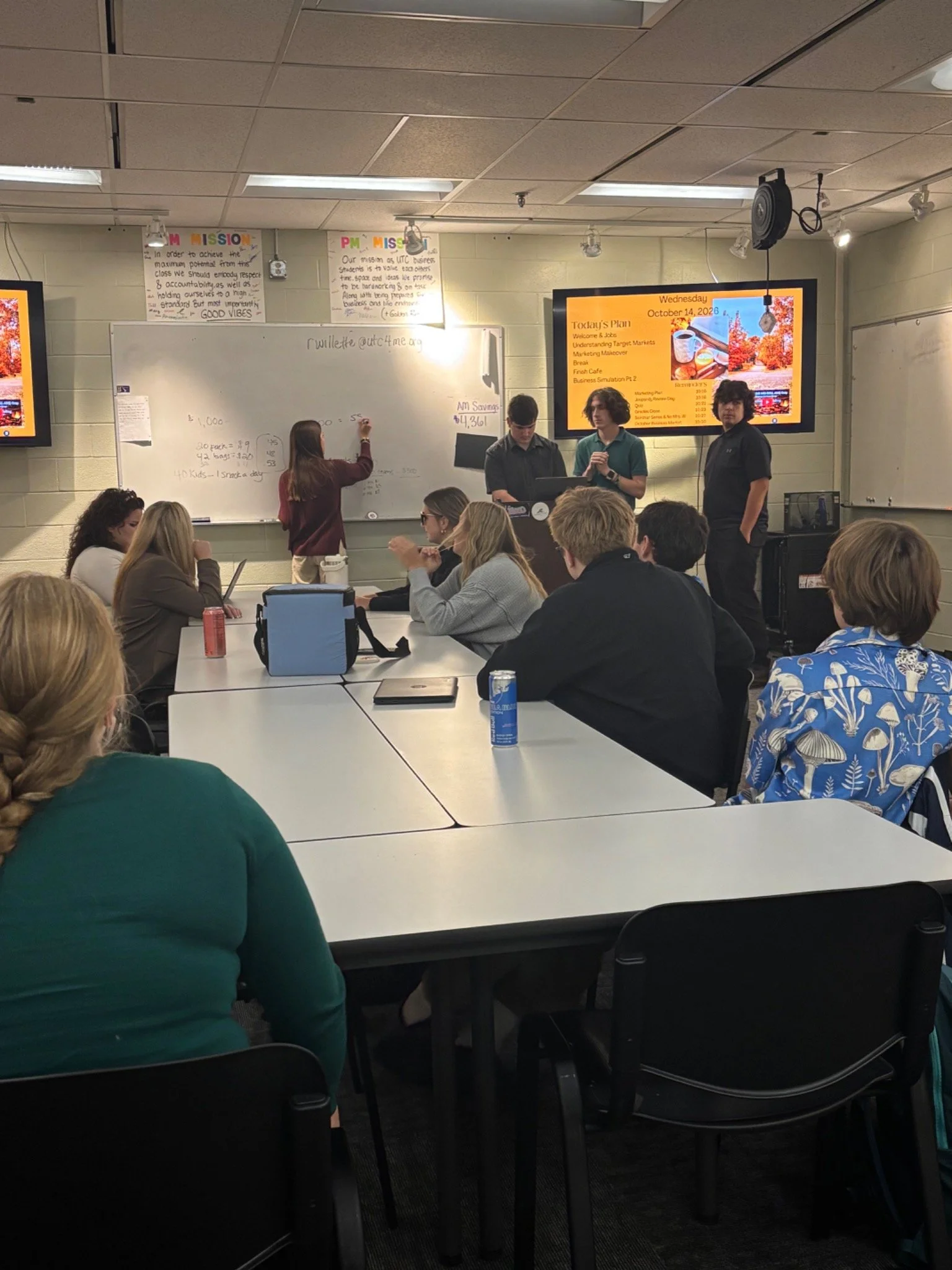
We were kicking off The D-Max Effect in the business program at United Technologies Center, and what I was watching wasn't an accident. It was the framework doing exactly what it was designed to do.
I've spent years building businesses, connecting people, and seeing what happens when young people are trusted with real responsibility. Those experiences, including years of community projects alongside my son Dorian, led me to develop The D-Max Effect, a structured approach to turning empathy into action and relationships into resources. I created it because having a good heart isn't the same as knowing how to make something happen, and wanting to help isn't the same as having a plan. That gap between good intentions and real results is precisely what The D-Max Effect was built to close.
At UTC, the students weren't simply brainstorming ways to volunteer. They were identifying assets, mapping their relationships, recognizing potential partners, and setting goals tied to a genuine need in their community. In other words, they were applying the same fundamentals I've relied on throughout my entrepreneurial career, and they were doing it entirely on their own.
That's what makes this approach different. We don't hand students a finished project and ask them to participate; we give them a framework they can use to build and lead one themselves. The result is far more than an opportunity to give back, because it's practical, hands-on experience in entrepreneurship, communication, accountability, and leadership. And there is something truly powerful about watching a teenager realize that the people they know, the ideas they have, and the actions they take can actually change something in the world around them.
I want to extend a special thank you to Acadia Federal Credit Union for making this experience possible. Through our shared commitment to fighting hunger, this partnership brings together two things I believe in deeply: meeting real community needs and giving young people the tools they need to lead. We're not just helping students understand hunger in their community; we're giving them a framework to actually do something about it.
The UTC students are only getting started, and their results are still ahead of them. But the first milestone was already visible on that very first day, because they weren't waiting for someone else to take charge. They were taking ownership, and that is exactly what The D-Max Effect is designed to do: turn potential into capability.
